Tilt Wears a Disguise
The tilt that costs you the most doesn't throw cards. It sits quietly, plays its B-game and blames variance.
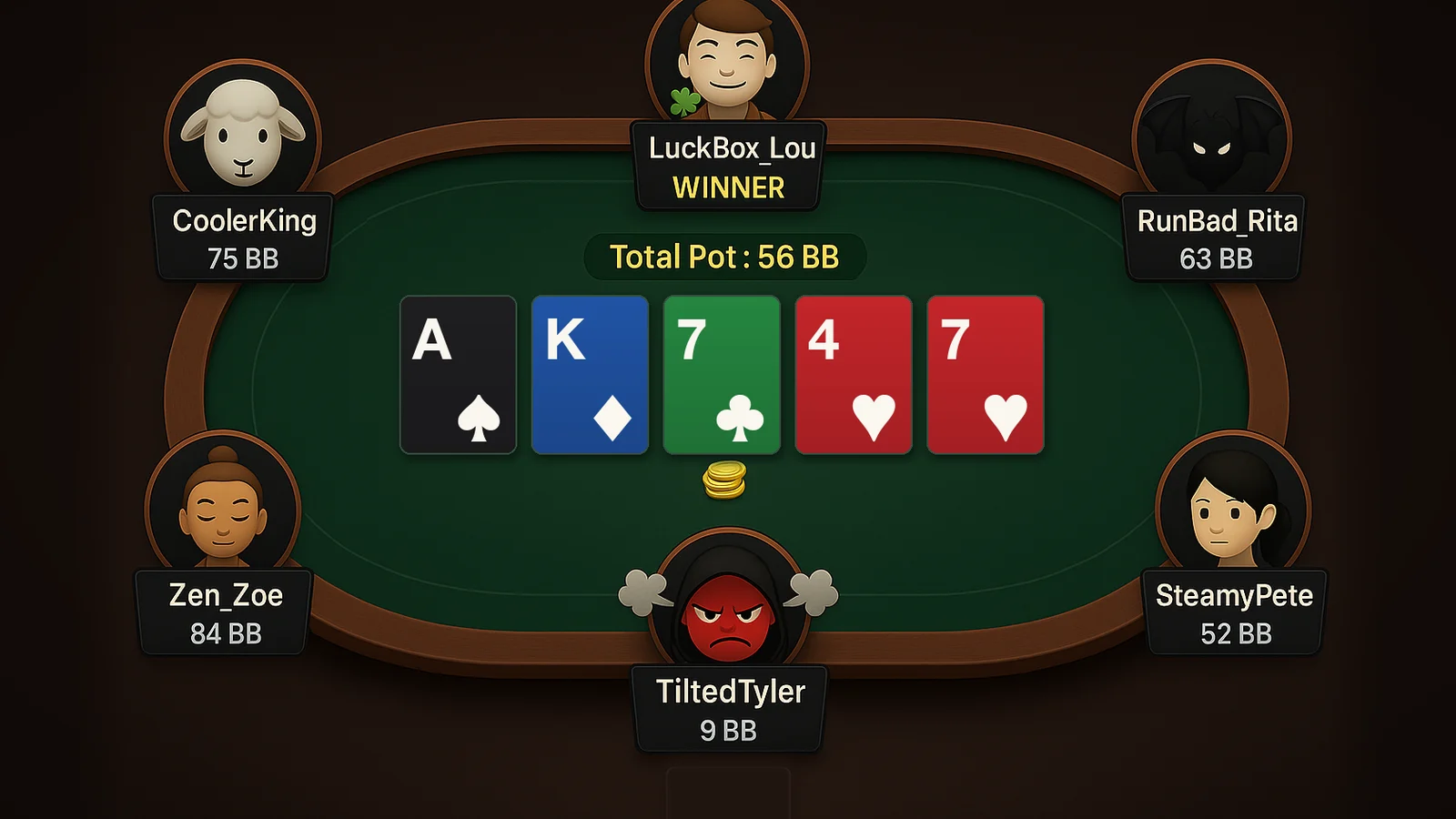
When people hear "tilt" they picture the guy throwing his cards at the dealer after a two-outer. That's tilt, sure. But it's the easy kind, because everyone can see it, including you.
The tilt that really costs money is quieter. It wears a cardigan and sips water. It looks a lot like normal poker.
B-game is tilt too
Here's the point most players miss: playing your B-game counts as tilt, not just the monkey kind after a suckout. If you're tired, distracted, bored or a bit annoyed and you're making slightly worse decisions, that's tilt. It's slower, and it costs more over a year because you don't notice it.
Results change your style without asking
This one hits close to home. Most players swing back and forth: loose, then tight, then loose again. You loosen up, play more marginal spots and the variance catches up, so you have a downswing. Shell-shocked, you tighten right up into a worse, more passive strategy.
Then you go on a heater while playing too loose, and it hides all the bad decisions until the next downswing.
The fix: don't change how you play because of recent results. Look at whether the specific decisions were good.
Check decisions before blaming variance
Bencb's rule for a downswing is to review your hands before blaming the deck. Sometimes it's variance. Sometimes it's a leak that's been there for months, and losing just made it visible. Either way you only find out by actually looking.
The bad beat reset
You get it in good on a deep run and lose a monster pot. You still have chips, just not the stack you were already spending in your head.
A trick worth stealing: swap "the chips I would have had" for "the chips I have now". You're not down a huge stack, you're sitting on 30bb with plenty of poker left. Play that stack, not the ghost of the bigger one.
The boring stuff that works
Bencb again: phone away at the table, and treat sleep and exercise as tournament prep. Not exciting advice. It's also the cheapest edge in poker.
A quick self-check
Every couple of hours, ask yourself one question: "Would I make this play if I were up for the day?" If the answer is no, take a walk. The blinds will wait. Well, they won't, but your stack will thank you anyway.