The Bubble Isn't a Fear Contest
Near the money, some players should tighten up and others should go to work. It all comes down to who covers whom.
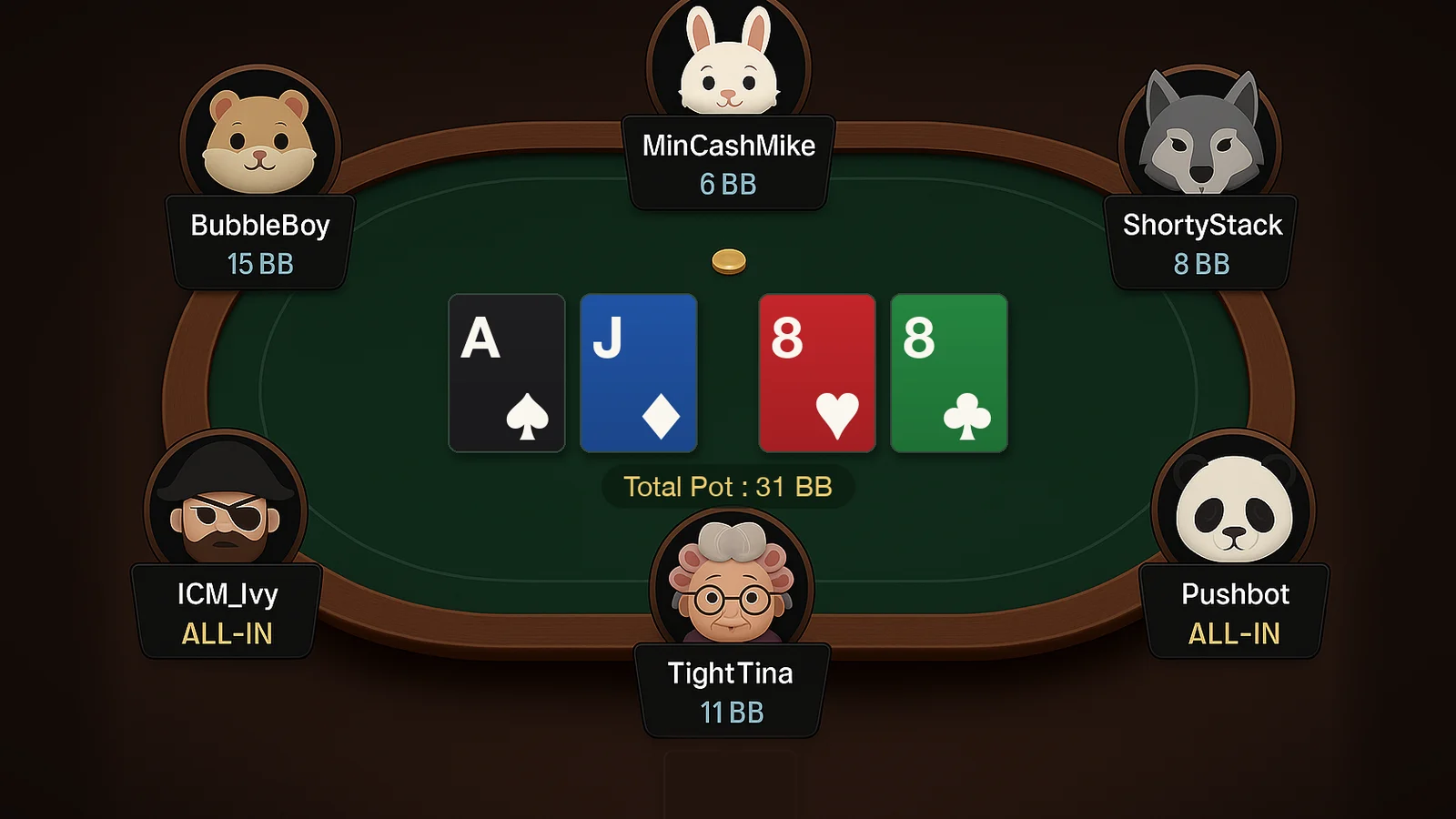
Ah, the bubble. Forty-six players left, forty-five paid, and suddenly a room full of grown adults is folding pocket nines like they're radioactive.
Some of that folding is correct. A lot of it isn't. The trick is knowing which chair you're sitting in.
Why chips change value
In a cash game every chip is worth the same. In a tournament, the chips you lose are worth more than the chips you win, because busting costs you every future payout. That's ICM in one sentence. The closer you get to the money (or a pay jump), the bigger that gap gets.
Here's the bit people miss: it doesn't hit everyone equally. It depends on who covers whom.
If you're covered: tighten up
If the player behind you has you covered, they can bust you. You can't bust them. That puts the pressure on you.
GTO Wizard shows this clearly. As you go from 25% of the field left to the stone bubble, a lojack opening range shrinks from about 246 combos to about 162. Hands like , 5-5, A-9 offsuit and K-J offsuit go from opens to folds. That's not cowardice, it's maths.
Here's a nice example. In the small blind facing a button open with at 20bb, and covered, just fold it. Same hand, 100bb deep and covering a loose opener? Now it's a 3-bet.
If you're the cover: go to work
Flip it around. If you're the big blind and you cover the opener, they're scared of you, and you should play like it. Solver work has the covering big blind defending wider on the bubble, with hands like T-8 offsuit, A-2 offsuit, even 7-5 offsuit. The opener can't fight back postflop without risking their tournament.
That's how big stacks build mountains on the bubble. They aren't lucky, they just understand who's under pressure.
The medium-stack squeeze
If you've got 25bb with two big stacks at the table, you're in the worst seat in the house. The rule here is short and useful: fold medium pairs to big 3-bets under ICM. Your 7-7 isn't worth your tournament against a big stack's 3-bet.
Where the money is made
Bencb also makes the point that a modest ROI gets built in late-game ICM spots, not in level two. Most of the field plays the bubble on instinct. If you know whether you're covered and adjust, you're already ahead of a lot of them.
So next bubble, before you look at your cards, look at the stacks. Then work out who's actually supposed to be scared.