Monotone Flops: Small Bets, Big Feelings
Three spades on the flop makes people weird. What GTO Wizard actually does on Q♠️ 6♠️ 2♠️, and when to slow down.
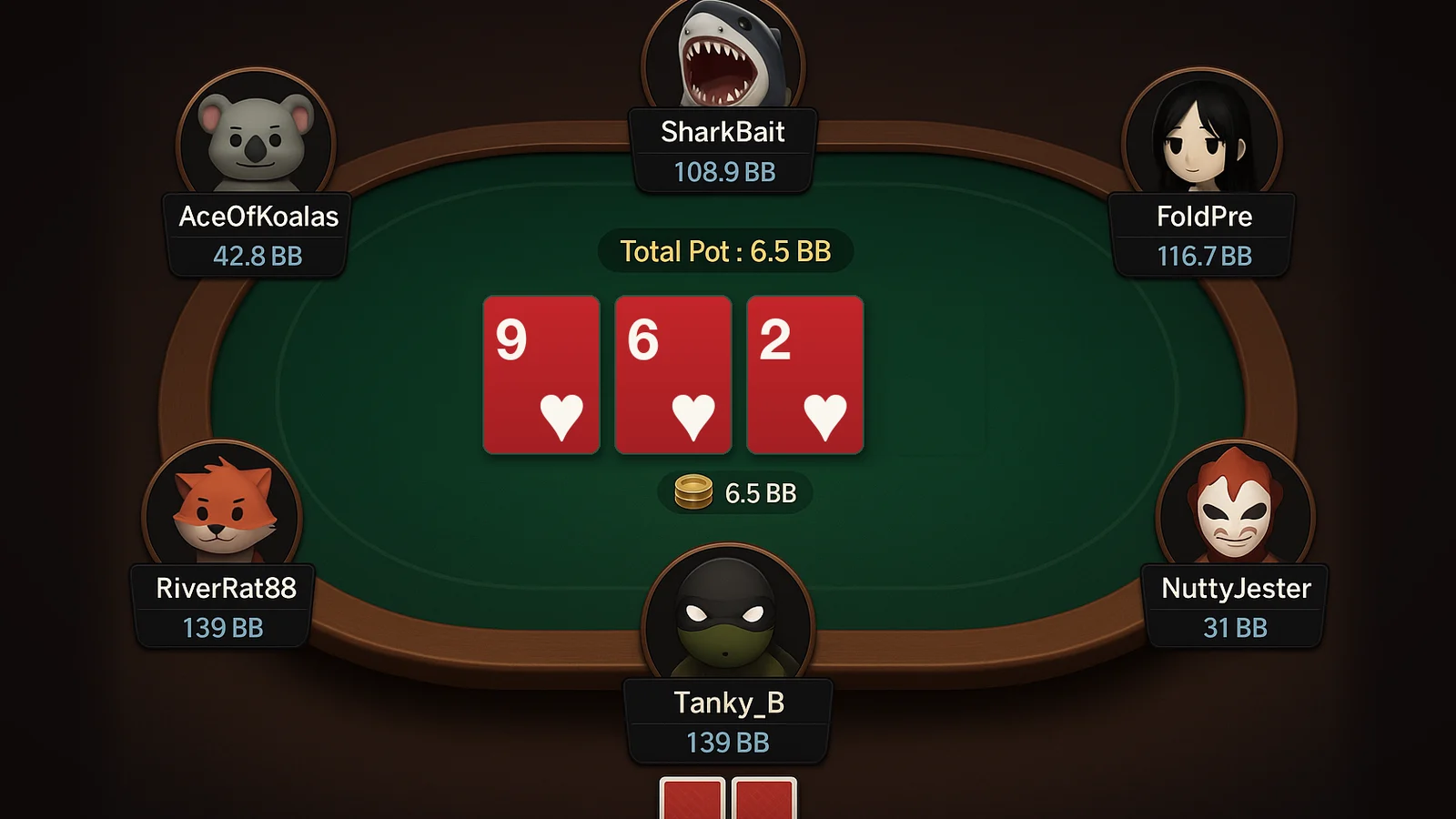
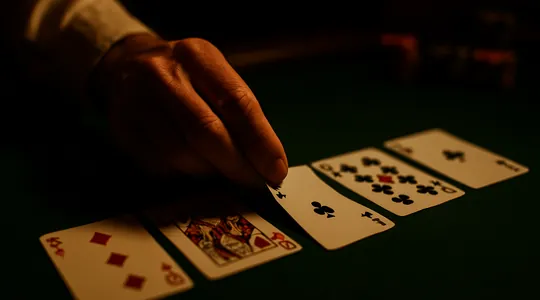
The dealer spreads the flop and it's . Three spades. Half the table sits up a bit straighter, the other half sighs.
Monotone flops make people weird. Some players slam the brakes and check everything. Others fire a huge bet to "protect" their pair of queens. Both are usually wrong.
Why monotone boards are different
On most flops, the turn card can change everything. On a monotone flop, a lot of the drama has already happened. Anyone with a flush has one, and anyone with one spade has a draw to the nuts or close to it.
That makes the board static. The rule for static boards is to bet small. Big bets are for boards where the next card can ruin your hand. Here the danger is already sitting there.
The GTO Wizard example
GTO Wizard walks through this exact flop: under-the-gun opens at 30bb, the big blind calls, flop .
Under-the-gun bets its whole range, small, around 20% pot. Every hand. The opener has more strong hands and more big spades, so a small bet does the job.
Give the big blind a 33% pot bet to face (a size plenty of live players use) and it does this:
- 52.5% of hands → call
- 38.8% of hands → fold
- 8.7% of hands → raise
The interesting bit: the big blind's raises with flushes come from hands like , a flush with a low spade, rather than . Most flushes just call to keep the checking range strong.
Out of position? Slow down
Here's where it changes. Solver work on blind-versus-blind spots, and the standard out-of-position rules, both have the raiser c-betting monotone flops least often when out of position. Without position, betting into a range full of flushes and draws gets expensive fast.
Facing a bet in a multiway pot
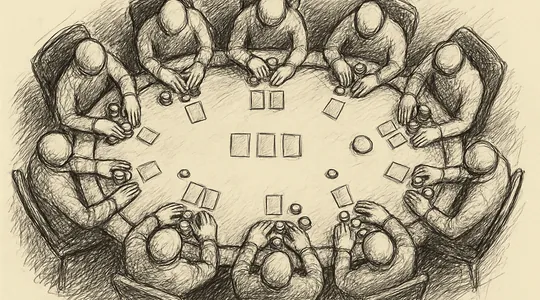
One more. Three-way on a monotone flop, facing a tiny c-bet: in position you can defend wide, even with overcards and no spade. Out of position with someone left to act, fold "dirty" hands like 8-7 offsuit that make dominated two pairs, and keep the cleaner ones.
The cheat sheet
In position as the raiser: bet small, and bet often. Out of position: check a lot more. Facing a bet: don't panic-fold your pair just because there are three spades on the board. The guy betting doesn't have the flush every time either.